The idea of living completely lectin-free sounds appealing at first, especially if you’ve experienced digestive discomfort, inflammation, or unexplained reactions to certain foods. But in reality, eliminating all lectins from the human diet is nearly impossible. Lectins are naturally present across the plant kingdom, woven into foods humans have eaten for thousands of years.
That’s why this approach focuses on low-lectin, not lectin-free.
Lectins do not affect everyone the same way. Some people tolerate nightshades with no issue, while others experience noticeable symptoms. Certain lectins can be problematic for sensitive individuals, while others appear neutral, or even beneficial depending on the food, preparation method, and the person eating it.
This creates a complex matrix of possibilities:
When you combine all of that, strict elimination becomes less practical and less helpful than understanding.
A low-lectin approach encourages awareness over restriction. It’s about learning how foods interact with your body, recognizing patterns, and making informed choices instead of following rigid rules. If digestion feels off, energy drops, or inflammation appears, the goal isn’t fear, it’s clarity.
This philosophy is the foundation of the Living Low-Lectin approach: not perfection, not extremes, but a sustainable path built on knowledge, observation, and personal response.
Living Low-Lectin is a lifestyle centered on understanding how certain naturally occurring food proteins called lectins interact with the human body, and learning how to reduce their potential impact through informed food choices and preparation methods.
 Lectins are found in many common foods, especially grains, legumes, nightshades, and some seeds. For some people, these proteins pass through the digestive system without much issue. For others, they may contribute to digestive discomfort, inflammation, brain fog, fatigue, joint pain, or a general sense that the body is working harder than it should. Living Low-Lectin is not about fear of food or rigid restriction. It is about awareness, preparation, and personalization.
At its core, this lifestyle encourages people to pay attention to how food makes them feel rather than following one-size-fits-all rules. It emphasizes cooking techniques like pressure cooking, fermenting, soaking, and peeling, as well as choosing ingredients that are naturally lower in problematic lectins. Over time, many people find that digestion improves, energy becomes more stable, inflammation eases, and their relationship with food feels calmer and more intentional.
Many people arrive at Living Low-Lectin after trying everything else. They may have experimented with elimination diets, supplements, or lifestyle changes without fully understanding why certain foods continue to cause issues. This approach offers a different lens. Instead of focusing only on calories, macros, or labels like gluten-free or plant-based, it looks at how specific proteins interact with the gut and immune system.
 A low-lectin journey can be empowering because it gives people tools rather than rules. It helps explain why a food that is considered “healthy” on paper may still cause problems for some individuals. It also shows that improvement does not require perfection. Small changes in preparation, sourcing, and timing can make a meaningful difference.
Most importantly, Living Low-Lectin is meant to be sustainable. It is not about cutting everything out forever. It is about learning enough to make informed choices, listening to your body’s signals, and building habits that support long-term well-being rather than short-term fixes.
If this way of thinking about food feels new or intriguing, the best place to begin is with the fundamentals. Understanding what lectins are, where they come from, and how they behave in the body provides the foundation for everything that follows.
To dive deeper into the science, food sources, and practical basics behind this lifestyle, visit Lectin Basics, where the concepts behind Living Low-Lectin are broken down in a clear, approachable way.
Welcome to the Living Low-Lectin bookshelf. This is where all of the guides, workbooks, and digital resources in the Living Low-Lectin series live in one place. Whether you’re looking for a deep dive into the science, a practical daily tracking tool, or a downloadable reference you can keep on hand, each book here is designed to help you better understand your body and build a low-lectin lifestyle that actually works in real life.

A Clear, Practical Approach to Low-Lectin Living
Living Low-Lectin is a practical guide for anyone who wants to understand how certain foods affect digestion, inflammation, and overall well-being without following extreme or confusing diet rules.
This book explains what lectins are, how they interact with the body, and how to make informed food choices that support balance and healing. With guidance on cooking, shopping, substitutions, and sustainable habit-building, it’s designed for real life, not perfection.
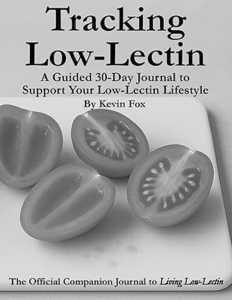
A 30-Day Journal to Track What Actually Works for You
Tracking Low-Lectin is a guided 30-day journal designed to help you observe how food, habits, and daily choices affect your body on a low-lectin lifestyle.
With space to track meals, symptoms, substitutions, hydration, sleep, and energy, this workbook helps reveal patterns over time—so you can make informed decisions with confidence.
Available in two formats on Amazon:
8.5 × 11 Full-size Tracking Low-Lectin Workbook for detailed at-home tracking
and
5.5 × 8.5 Portable Edition Tracking Low-Lectin for daily carry and travel
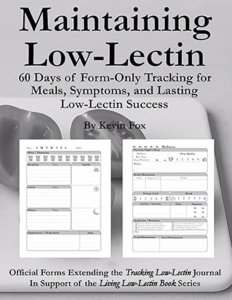
A Simple, 60-Day Refill Workbook for Low-Lectin Tracking
Maintaining Low-Lectin is a forms-only, 60-day tracking workbook designed for long-term use. With no additional reading or extras, it offers clean, structured pages for continued meal and symptom logging after completing the guided Tracking Low-Lectin journal.
Ideal for maintenance, pattern recognition, and ongoing clarity, without unnecessary complexity.
8.5 × 11 Full-size Maintaining Low-Lectin Workbook for detailed at-home tracking
and
5.5 × 8.5 Portable Edition Maintaining Low-Lectin for daily carry and travel
Understanding your body takes time, patience, and reliable information. Continue your journey by exploring articles, guides, and insights designed to help you make sense of lectins, food choices, and how they may affect you personally.
Long before potatoes became familiar staples in European and North American kitchens, tropical communities were cultivating underground crops that could be boiled, mashed, roasted, ground into flour, or prepared as beverages.
A fragrant coconut curry soup brings together tender pieces of wild-caught fish, aromatic spices, and fresh vegetables in a creamy, golden broth.
Long before modern food laboratories began measuring antinutrients, mineral availability, and fungal toxins, Indigenous communities in Mesoamerica had developed a method of preparing corn that fundamentally changed its nutritional and culinary properties.
A person can eat carefully selected foods, drink adequate water, and still struggle with constipation, bloating, or the uncomfortable sensation that a bowel movement never quite finishes.
A well-stocked pantry can make everyday cooking easier, particularly when it contains ingredients that usually require hours of preparation.
A low-lectin lifestyle can change the way someone thinks about dessert.
Rich, tender beef, earthy root vegetables, and a deeply flavored broth come together in a comforting low-lectin meal that makes excellent use of pressure cooking.
There is something satisfying about preparing a meal outdoors after a long day of hiking. The surroundings are quiet, the air feels different, and even a simple bowl of warm food can become one of the highlights of the trip.
Mushrooms occupy an interesting place in the low-lectin kitchen. They offer deep, savory flavors, satisfying textures, and a range of naturally occurring compounds that have attracted considerable scientific interest.
There is something satisfying about a meal that comes together in one pan, fills the kitchen with the aroma of garlic and fresh ginger, and delivers a generous plate of food without leaving you feeling overly full.